
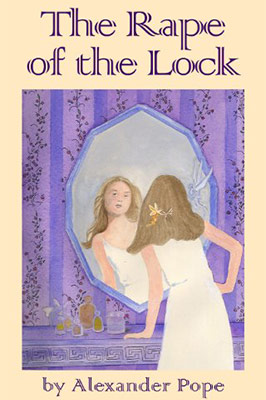
Alexander Pope’s The Rape of the Lock is one of the most celebrated mock-epic poems in English literature. At its heart, it parodies the conventions of classical epic poetry by treating a trivial event—a young lord cutting off a lock of a lady’s hair—with the grandeur usually reserved for heroic epics. One of the most significant aspects of this mock-epic form is Pope’s inventive use of supernatural machinery, especially the inclusion of sylphs, gnomes, nymphs, and salamanders.
Borrowing the term “machinery” from John Dryden, Pope defines it in his preface as “the deities, angels, or demons employed in a poem”. In The Rape of the Lock, he substitutes epic gods and goddesses with airy spirits drawn from Rosicrucian mythology, giving the poem a fantastical, humorous dimension. This essay explores how Pope uses supernatural machinery to enrich his satire, parody epic conventions, and critique the values of 18th-century aristocratic society.
The Origin of the Supernatural Beings: Rosicrucian Influence
Pope was inspired by The Comte de Gabalis, a French satire on occult philosophy, which described spirits of the four elements: sylphs (air), gnomes (earth), nymphs (water), and salamanders (fire). He adapts this mythological framework to fit the world of fashionable society. In Pope’s version:
- Sylphs are the spirits of coquettes—women who were vain in life and are now tasked with guarding the virtue and appearance of the living.
- Gnomes were once prudes, now envious of the beautiful and frivolous.
- Nymphs and salamanders have lesser roles but contribute to the satirical tone.
This mythologized system allows Pope to mock the absurdity of aristocratic customs while simultaneously imitating the elevated style of epic poetry.
The Role of Ariel and the Sylphs
The leader of the sylphs, Ariel, functions as a guardian spirit to Belinda, the poem’s heroine. In Canto I, Ariel explains the sylphs’ duties:
Our beings, some to be, and some to guard;
Some ward the nymph, and some attend the guard.
Their primary mission is to preserve a lady’s chastity and beauty, which in this context are satirical stand-ins for epic honor and virtue. Pope pokes fun at the overvaluation of appearance in high society by making it a cosmic concern for the spirits.
Despite their efforts, Ariel and the sylphs fail to protect Belinda’s lock, leading to the titular “rape” (the forcible theft of the lock). This parodic failure mirrors the ineffectuality of classical deities in Homer or Virgil, but in a domestic and comedic context.
Supernatural Machinery as Mock-Heroic Tool
The use of supernatural beings allows Pope to imitate epic structures while simultaneously deflating them. For instance:
- The epic battle becomes a card game (ombre) in Canto III.
- Ariel’s foreboding visions parody the solemn omens of classical mythology.
- The descent of Umbriel into the Cave of Spleen (Canto IV) mimics Aeneas’ journey into the underworld in The Aeneid, but with comic and exaggerated imagery.
The Cave of Spleen, where Pope introduces figures like Ill-nature and Affectation, becomes a metaphor for female hysteria and vanity, treated with both humor and critique. The spirits in this scene function as personifications of emotional excess, further blurring the lines between epic fantasy and social satire.
Pope’s Satirical Aim: Elevating the Trivial
By assigning supernatural guardians to fashionable women and mystical weight to hairstyles, Pope satirizes the trivial pursuits of the aristocracy. The entire machinery serves to inflate the inconsequential, mimicking the grandeur of epics while criticizing how society elevates appearance and flirtation to the level of heroism.
As literary critic Maynard Mack observes, “Pope does not merely mock the epic; he mocks the world that takes trifles seriously enough to need an epic.” In that sense, the supernatural machinery is not just decorative—it is central to Pope’s moral and satirical message.
Conclusion: Supernatural Machinery as Comic Grandeur
In The Rape of the Lock, Alexander Pope masterfully uses supernatural machinery not as genuine metaphysics but as mock-heroic embellishment. Sylphs and spirits act as comic stand-ins for the epic gods, allowing Pope to parody not only classical poetry but also the vanity, idleness, and artificiality of contemporary high society.
The machinery gives the poem its epic frame, but it also deepens the satire, making it clear that in this world, appearances are everything and gods of air guard powdered wigs and painted cheeks. Through this literary device, Pope redefines heroism and invites readers to question what society truly values.