
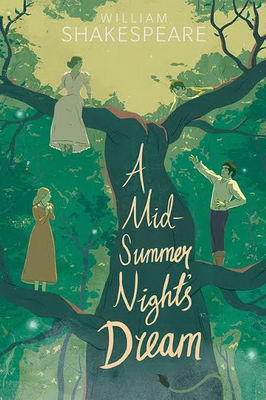
A Midsummer Night’s Dream is one of William Shakespeare’s most enchanting and imaginative comedies, blending romantic confusion, magical transformation, and theatrical farce. Written in the late 16th century, this play continues to captivate modern audiences with its exploration of love, illusion, dreams, and the chaos of human emotion. Set between the structured world of Athens and the mystical realm of a fairy-inhabited forest, the play offers a whimsical yet profound meditation on the irrational nature of love and the transformative power of imagination.
At the heart of the play are four young Athenian lovers—Hermia, Lysander, Demetrius, and Helena—whose romantic entanglements drive much of the comedy. Hermia defies her father Egeus’s order to marry Demetrius, as she is in love with Lysander. The pair flee into the forest to escape Athenian law. Unbeknownst to them, they are pursued by Demetrius (still in love with Hermia) and Helena (who is hopelessly in love with Demetrius). What follows is a chaotic whirlwind of mismatched affections, made even more absurd by the intervention of the fairy world.
In the forest, the world of humans collides with that of fairies. The fairy king Oberon, in a quarrel with his queen Titania, instructs his mischievous servant Puck to use a magical flower that causes people to fall in love with the first creature they see. Puck’s meddling leads to a cascade of comic errors: Titania falls in love with Bottom, a weaver whose head has been magically transformed into that of a donkey, while the four lovers fall into a tangled mess of mistaken affections and rivalries. Through the dreamlike logic of magic, the boundaries between reality and fantasy blur, revealing the unpredictable and often irrational nature of love.
Parallel to the lovers’ plot is the subplot of the mechanicals—a group of bumbling craftsmen who rehearse a play to perform at the Duke’s wedding. Led by the overconfident Bottom, their earnest but ridiculous attempts at drama provide some of the play’s most memorable comic moments. Their farcical performance of Pyramus and Thisbe becomes a play-within-a-play that humorously mirrors the themes of miscommunication and tragic love, adding a layer of meta-theatrical commentary on the nature of performance and art.
Shakespeare weaves together these distinct plotlines—lovers, fairies, and amateur actors—through a rich tapestry of poetic language and visual spectacle. The setting of the forest functions as a liminal space, a magical dreamscape where social norms are suspended and identities are fluid. Here, the play questions the stability of love, the power dynamics between men and women, and the tension between order and chaos. Dreams and illusions are central motifs, reminding audiences that love itself is often as fleeting and fantastical as a midsummer night’s dream.
Ultimately, order is restored as the characters awaken from their enchanted night. The Duke of Athens, Theseus, pardons Hermia and allows her to marry Lysander. Demetrius, now magically in love with Helena, forgets his former pursuit of Hermia. Titania and Oberon reconcile, and the mechanicals perform their hilariously botched play at the Duke’s wedding feast. The play ends with celebration, marriage, and the suggestion that reality, like dreams, can be shaped by imagination and desire.
A Midsummer Night’s Dream endures not only for its delightful humor and lyrical beauty but also for its insightful commentary on the nature of love, identity, and theatrical illusion. Shakespeare captures the delirium and delight of falling in love, the fickleness of emotion, and the blurring of reality and fantasy with masterful precision. In doing so, he invites audiences to laugh, reflect, and lose themselves—if only briefly—in the strange and magical world of dreams.