
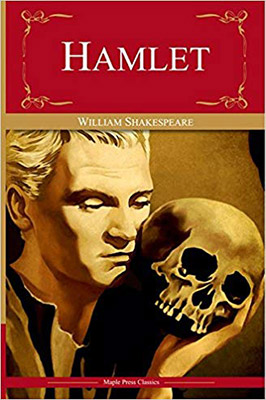
William Shakespeare’s Hamlet is one of the most famous tragedies in English literature. It is a timeless revenge tragedy filled with betrayal, madness, and existential drama. Written around 1600, this play remains a cornerstone of classical drama, frequently studied and performed worldwide. This five-act play follows Prince Hamlet as he seeks vengeance for his father’s murder, leading to a bloody and tragic climax.
Act 1: The Ghost’s Revelation
The play opens in Denmark, where guards at Elsinore Castle witness the ghost of King Hamlet, the recently deceased ruler. Prince Hamlet, the king’s son, is grieving his father’s death while disapproving of his mother Queen Gertrude’s hasty marriage to his uncle Claudius, who has now become king.
When the ghost appears to Hamlet, it reveals that Claudius murdered King Hamlet by poisoning him. The ghost demands revenge, setting the central conflict in motion.
Act 2: Hamlet’s Feigned Madness
To uncover the truth, Hamlet pretends to be mad, behaving erratically to avoid suspicion. He hires a troupe of actors to perform “The Mousetrap,” a play mirroring Claudius’s crime. Meanwhile, Polonius, the king’s advisor, believes Hamlet’s madness stems from love for his daughter Ophelia.
Act 3: The Play Within a Play and Murder
During the performance, Claudius reacts guiltily, confirming his crime to Hamlet. In a tense moment, Hamlet hesitates to kill Claudius while he prays, fearing he might go to heaven.
In a fit of rage, Hamlet accidentally kills Polonius, mistaking him for Claudius. This act triggers a chain of tragic events.
Act 4: Schemes and Exile
Claudius sends Hamlet to England, secretly ordering his execution. However, Hamlet escapes and returns to Denmark. Meanwhile, Ophelia goes mad from grief over her father’s death and drowns. Her brother Laertes vows revenge against Hamlet.
Act 5: The Tragic Duel and Conclusion
In the final act, Hamlet and Laertes duel. Claudius poisons a sword and wine to ensure Hamlet’s death. However:
Gertrude drinks the poisoned wine and dies.
Laertes wounds Hamlet with the poisoned blade but is also fatally struck.
Before dying, Laertes reveals Claudius’s treachery.
Hamlet finally kills Claudius before succumbing to his wounds.
The play ends with Fortinbras, the Prince of Norway, arriving to take control of Denmark, declaring a proper burial for Hamlet.
Key Themes in Hamlet
Revenge – Hamlet’s quest for vengeance drives the plot but leads to destruction.
Madness – Both real and feigned insanity blur the line between truth and deception.
Mortality – The famous “To be or not to be” soliloquy reflects on life, death, and existential doubt.
Betrayal – Claudius’s treachery and Gertrude’s remarriage fuel Hamlet’s distrust.
Moral Corruption – The decay of Denmark’s monarchy symbolizes broader societal decay.
Why Hamlet Remains Relevant
Shakespeare’s Hamlet continues to captivate audiences due to its complex characters, psychological depth, and timeless themes. Whether analyzed for its philosophical questions, tragic structure, or dramatic irony, Hamlet remains essential reading for literature enthusiasts.